Use Private Money To Grow Your Real Estate Business! Team Thayer #RealEstate #Realtor #investor #oregon
Make no mistake about it, private money lenders are investors looking to make profits off of somebody else. However, their cooperation with real estate investors has essentially changed today’s financial landscape. A private money lender is an investor who makes loans secured by real estate. While they may serve the same purpose as a traditional lending institution – think government loans and big banks – there are several key differences: private money lenders typically charge higher rates than banks, but will also make loans that the average bank would usually pass on. It is important to note the difference between the two. While banks and similar lenders may offer the most attractive rates, they do not provide the same combination of speed and transparency in the decision-making process. For these reasons alone, private money is essential to growing your real estate business.
The average real estate investor relies on a steady flow of private money to supplement their respective deals. Not only are institutional loans lengthy and cumbersome, but they can also impede the progress of a residential redeveloper. Conversely, private money can afford investors the ability to grow their business at a steady pace.
If you are interested in using or becoming a private money lender, check out part one of our series: A Guide For Private Money Lenders. It will give you a basic break down of what it means to be a private lender while also explaining the anatomy of the private loan. Learn how to properly identify borrowers, choose profitable investments and more. If you are more familiar with private lending, you will enjoy part four of our series: A Guide For Private Money Lenders: Private Vs. Hard Money. There you will find an in depth analysis of the difference between private and hard money so that you can better determine what will be more beneficial to you and your business. Master what it takes to get the attention and respect from these types of investors in order to maintain a sustainable real estate business.
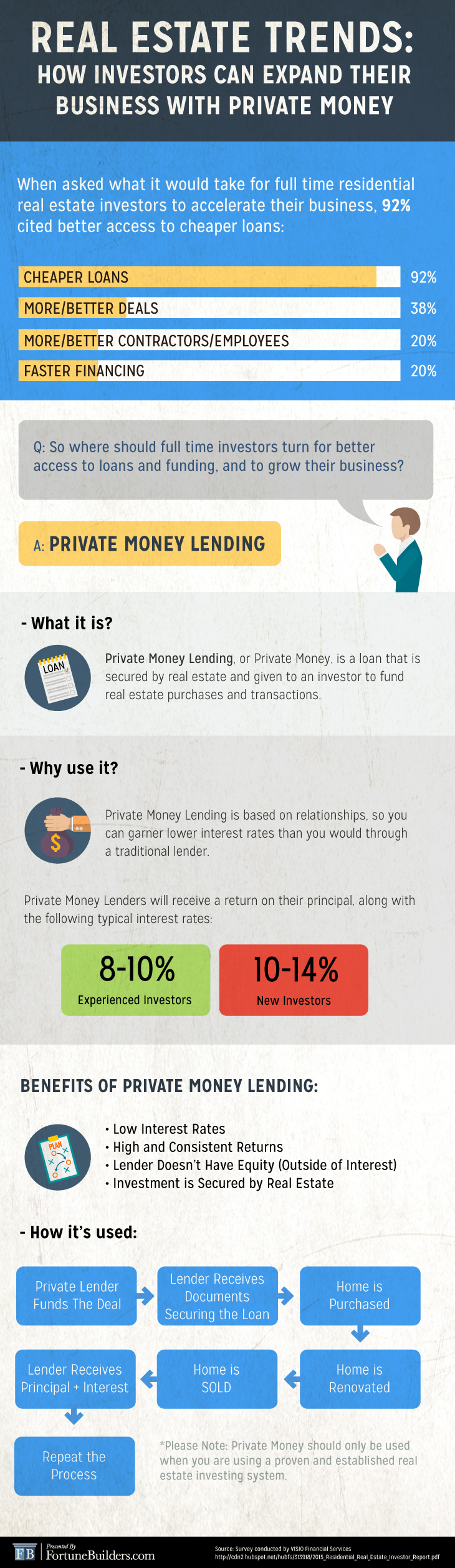
For a visual representation of how to grow your real estate business with the help of private money, reference the infographic below:
 |