The United States is Experiencing an Affordable Housing Crisis Team Thayer #RealEstate #Housingnews #Eugene #oregon
The future of housing in America can seem so close, yet so far away, but government officials and housing experts are already hot on the case making their evaluations of the present state of the market and predictions for the future.
HUD Secretary Julián Castro discussed the future of housing Wednesday in a discussion forum, which highlighted issues surrounding affordable housing across America.
Other speakers in the discussion included: David Adame, President and CEO, Chicanos Por La Causa; Lisa Belkin, Author and HBO Consultant, "Show Me A Hero", HBO; Mark Calabria, Director of Financial Regulation Studies, Cato Institute; Eileen Fitzgerald, President, Stewards of Affordable Housing for the Future; and Chris Herbert, Managing Director, Harvard Joint Center for Housing Studies, among many others.
In the discussion, Secretary Castro first addressed the state of the housing market today by shining some light on the headliner topic of affordability issues.
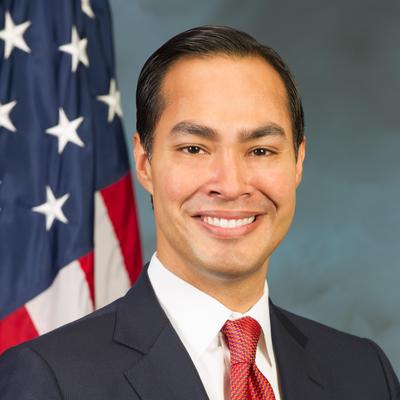
HUD Secretary Julián Castro
"We are in a much better place nationally in terms of our housing market than we were a few years ago when we went through the housing crisis... in terms of home sales, home values, and levels of foreclosures, we are much stronger today than we were a few years ago," Secretary Castro noted.
Secretary Castro then began to discuss the larger issue on everyone's mind: affordable housing. In addition, he talked about housing trends among older Americans.
Other speakers noted that the problem has shifted from demand to supply and is not just within housing itself, but also among inequality in all forms.
"We have a massive supply problem and can't transform housing over night," Fitzgerald noted.
Secretary Castro outlined that HUD's goal is to provide affordable, accessible, and inclusive communities for all consumers. "Homeownership is at its lowest level in decades. It's a challenge we need to tackle," he said.
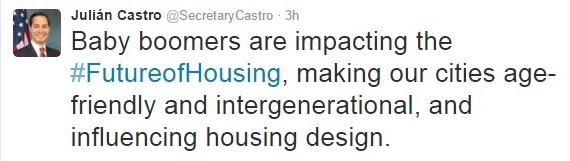
The aging population also plays an important part in the future of housing. Secretary Castro said in the discussion that not enough preparation has been done to accommodate older Americans.
"Older Americans don't get enough attention in regards to housing needs," he said. "We haven't prepared for people to age...this compounds the affordability crisis attention in housing needs to shift from the Millennials to the baby boomers. There's value in older adults...we need to cultivate that."
Despite how bleak the picture may appear, the housing market has made many strides.
 Secretary Castro explained that there has been a 36 percent overall reduction in homelessness in the U.S. Federal Housing Administration (FHA) loans were a huge driver for minority homeownership, and 44 percent of home loans that went to African-Americans last year were from the FHA.
Rental affordability is topic that the entire mortgage industry has familiarized itself with as renting is more expensive than buying in most places. "We have a rental affordability crisis in the US," Secretary Castro explained.
There is not one place in the country where consumers can afford to rent a 2-bedroom apartment of a full-time minimum wage salary.
The solution to affordable housing for all consumers "will take creativity and new resources to leverage private investment," Secretary Castro said.
 |
| JUSTIN LEE THAYER 541-543-7287 |