Housing Outlook 2016: Higher Home Sales and Prices Team Thayer Real Estate #News #RealEstate #housing #oregon
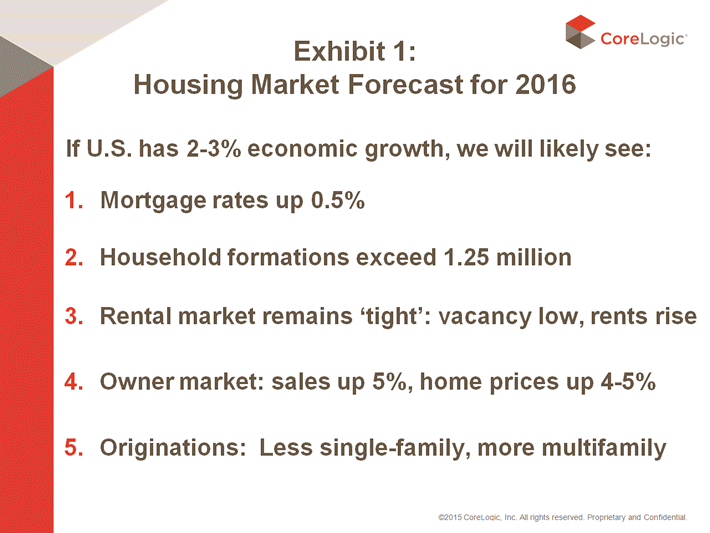
 The year 2016 is expected to usher in the creation of 1.25 million new households, higher rental demand, increased home sales, and a rise in home purchase loan originations even as refinancing volume plummets, CoreLogic’s Chief Economist predicted Monday.
Dr. Frank Nothaft, senior vice president and chief economist at CoreLogic, released his 2016 Outlook for Housing. The signature report offers viewers a few twists, turns and apparent contradictions.
For starters, Nothaft estimates dollar volumes for single-family mortgage originations will plummet 10% despite his prediction of a significant rise in home equity lending and home purchase loan originations.
Still, he says, an uptick in those areas will be offset by a 34 percent decline in refinancing activity as mortgage rates rise, scaring off homeowners who have yet to refinance their existing mortgages.
At the same time, multifamily originations will continue to grow considering rental vacancy rates are now at or near their lowest levels in 20 years, Nothaft noted in his report.
The economist expects demand for apartments and houses to rise significantly in 2016 as younger households take form.
 Meanwhile, interest rates will move higher on a gradual basis, causing adjustable-rate mortgage holders to see notable increases in interest rates at a time when the Federal Reserve is expected to raise short-term rates one percentage point between now and the end of 2016, Nothaft says.
As for fixed-rate mortgages, Nothaft estimates a one-half of a percentage point rise between now and the end of 2016, with a forecast of 4.5 percent on the 30-year loan.
As for home sales and home prices, Nothaft expects both economic fundamentals to experience increases next year. He even predicts the CoreLogic Home Price Index will rise 4 to 5 percebt in 2016 as consumers experience the benefits of an improved economy and financial stability.
"As we approach the start of 2016, the consensus view among economists is that economic growth will continue, and the U.S. will enter an eighth consecutive year of expansion in the second half of next year,” Nothaft reported. “Most forecasts place growth at 2 and 3 percent during 2016, creating enough jobs to exert downward pressure on the national unemployment rate.”
 |
| Justin Lee Thayer 541 543 7287 |