Foreclosure Inventory is Concentrated in a few pockets. Team Thayer Real Estate #HousingNews #MarketNews #realestate
 The nation’s foreclosure inventory, or the share of residential mortgage loans in some state of foreclosure, is only a fraction of what it was at its peak. A large portion of the foreclosure inventory that is remaining is concentrated in a just a few states, according to CoreLogic’s October 2015 National Foreclosure Report released Tuesday.
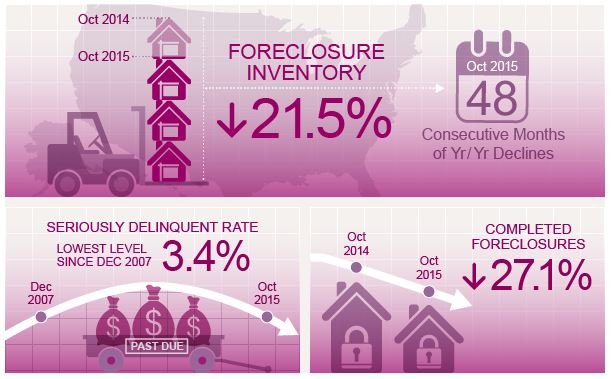
The number of residential homes in foreclosure nationwide at the end of October totaled approximately 463,000, or 1.2 percent of all homes with a mortgage—is lowest level since November 2007. October’s total was a decline of about 21.5 percent from the end of October 2014, when foreclosure inventory totaled about 589,000, or 1.5 percent of all homes with a mortgage. The number of residential mortgage loans in foreclosure has now declined year-over-year for 48 consecutive months.
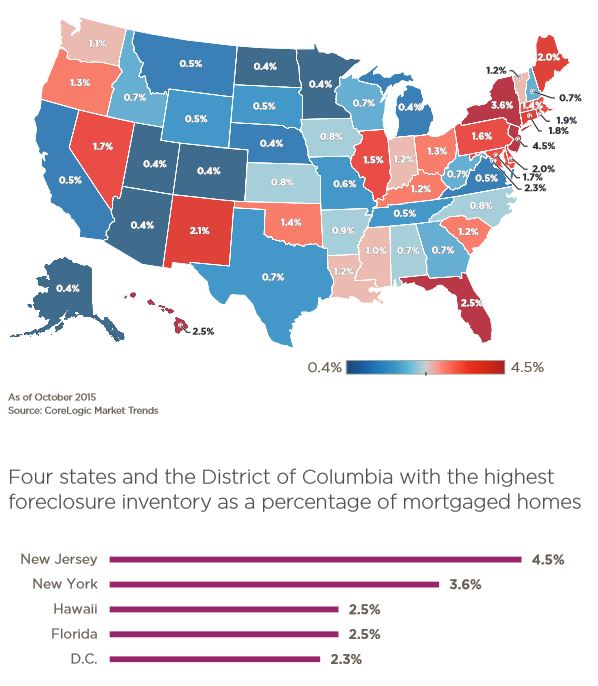
The remaining foreclosure inventory is concentrated in a few states, according to CoreLogic. As of the end of October, only 16 states plus the District of Columbia had foreclosure rates higher than the national average for the month of 1.2 percent. The leaders were New Jersey (4.5 percent), New York (3.6 percent), Hawaii (2.5 percent), Florida (2.5 percent), and Washington, D.C. (2.3 percent). The October foreclosure inventory for the top four states, while still high, represented substantial declines from a year earlier (New Jersey—5.5 percent, Florida and New York—4.1 percent each, Hawaii—2.9 percent).
 “We are heading into 2016 with the lowest foreclosure inventory in eight years thanks to escalating home values and progressive improvement in the U.S. economy. A large proportion of the remaining foreclosure inventory is clustered in New York, New Jersey and Florida,” said Anand Nallathambi, president and CEO of CoreLogic. “Equally encouraging is the drop in mortgage delinquency rates reflecting the stronger labor market and tighter underwriting since 2009.”
Completed foreclosures were also concentrated in a few states during October, as is typically the case. Five states (Florida with 86,000, Michigan with 59,000, Texas with 30,000, Georgia with 25,000, and California with 24,000) accounted for nearly half of the nation’s 494,000 foreclosures completed in the 12-month period ending October 31, 2015. This number represented a substantial year-over-year decline: for the 12-month period ending October 31, 2014, the total was approximately 561,000.
Approximately 37,000 foreclosures were completed in October, a 27 percent decline from October 2014’s total of 51,000. While the number of monthly completed foreclosures has been on the decline, it still has a ways to go before reaching its pre-crisis “normal” level 21,000 (the monthly average from 2000 to 2006). The number of foreclosures completed, which is a true measure of homes lost to foreclosure, has totaled about 6 million since September 2008—the onset of the housing crisis. Since homeownership rates peaked in Q2 2004, about 8 million homes have been lost to foreclosure nationwide.
More good news from CoreLogic’s report: the number of mortgages in serious delinquency (90 days or more past due or in foreclosure or REO) fell to its lowest level since December 2007. As of the end of October, about 1.3 million mortgages, or about 3.4 percent of all mortgages nationwide, were in serious delinquency—a 19.7 percent decline from the previous October.
“Improved economic conditions and more foreclosure completions have pushed the foreclosure rate lower,” said Dr. Frank Nothaft, chief economist for CoreLogic. “The national unemployment rate declined to 5.0 percent in October, the lowest since December 2007, and the CoreLogic national Home Price Index has risen 37.0 percent from its trough.”